
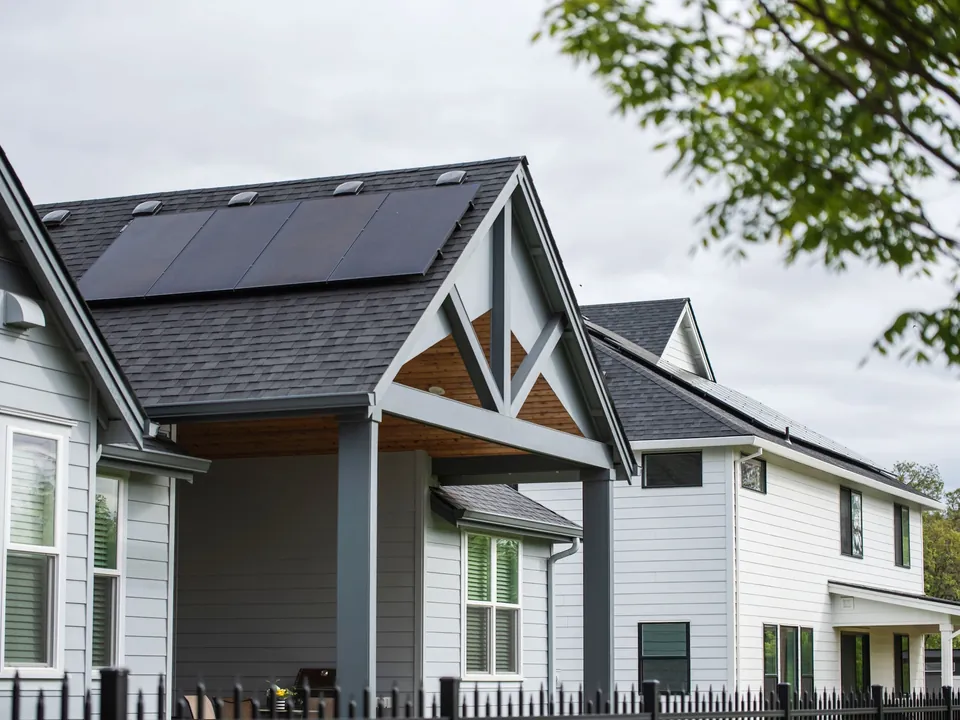
Does solar work in the Pacific Northwest?
Yes, solar works in the Pacific Northwest, even with clouds and rain. Homeowners often ask why solar companies need their electric bill; we answer that in a separate post. Let's unravel the science behind solar panels working efficiently in the region.
Converting Sunlight into Electricity
Solar panels function through the use of photovoltaic cells, tiny units that capture sunlight and convert it into electricity. When sunlight strikes the cell, it knocks electrons free from their atoms. Each cell has a built-in electric field that pushes the freed electrons in one direction. This movement of electrons is what we call electricity.
Now, you might wonder, "What happens on a cloudy day?" Interestingly, solar panels still function under overcast conditions. They might produce less electricity, but they never stop entirely, making them effective even in Oregon's cloudier climates.
How Solar Panels Feed Your Electrical System
The electricity produced by your solar panels is in the form of direct current (DC). However, most homes and businesses use alternating current (AC). Therefore, an inverter is needed to convert the DC electricity into usable AC power, which can then power your electrical appliances.
An important part of this system is the electrical panel, often rated at 200 amps in modern homes. The panel functions as the central hub where the power from your solar system enters your home and is then distributed to your various circuits. In older homes, an electrical panel upgrade may be necessary to handle the new energy generated by the solar system.
The Role of Battery Backup in Solar Systems
A battery backup does more than provide power during an outage.
It also allows for energy storage, which can be utilized when your panels aren't producing enough electricity, such as during nighttime or particularly cloudy days.
Modern solar batteries are durable and built to last many years. They help you make the most of the electricity your panels generate, which increases your energy independence and reduces reliance on the grid.
Read More:
The Future is Electric: EV Chargers and Solar Power
Solar power can charge your electric vehicle with your own clean electricity.
Not only does this reduce your carbon footprint, it can also save on energy costs and trips to the pump.
Solar Incentives in Oregon
The state of Oregon offers various incentives to encourage the adoption of solar energy. These incentives can reduce the cost of installing a solar system, making it an even more attractive option for homeowners and business owners.
Here's a brief rundown of some of these incentives:
- Energy Trust of Oregon Incentive: Energy Trust of Oregon has offered cash incentives for solar installations. Amounts and eligibility change often - we check the current numbers for your home.
- Net Energy Metering (NEM): NEM programs allow solar system owners to feed excess solar power back to the grid in exchange for credits. These credits can offset your energy costs during periods when your solar system is not producing enough electricity.
- Federal Investment Tax Credit: The federal residential credit was available to homeowners across the U.S., including Oregon, but it ended Dec 31, 2025. Business credits may still apply - check with your tax advisor.
- Property Tax Exemption: Solar systems can increase the value of your property. However, in Oregon, the added value from solar installations is exempt from property tax assessments, saving you money over the long term.
- Solar Plus Storage Rebate Program: This state program has offered rebates for residents installing battery storage systems alongside their solar panels, making it more affordable to ensure continuous power supply even when solar production is low.
Update, Oct 2026: the federal residential solar credit (25D) ended Dec 31, 2025. Business credits may still apply - ask us.
Steps to Implementing Solar, Battery Backup, and EV Charging at Home
Moving to solar, battery backup, and an EV charger comes down to a few clear steps. Here's a simple step-by-step guide on how you can incorporate solar power, battery backup, and EV charging into your home.
Step 1: Assess Your Energy Needs
Understanding your current energy consumption is the first step. Consider the energy usage of your appliances, your heating and cooling needs, and your EV charging requirements. Your recent utility bills can give you a clear picture of your consumption patterns, and a free quote turns that into a system size.
Step 2: Install a Solar Power System
Based on your energy needs, invest in a solar power system that can efficiently convert sunlight into electricity. Remember, the orientation and angle of your solar panels significantly impact energy production. Professional installation helps your system get the most sunlight exposure and energy production.
Step 3: Upgrade Your Electrical Panel
If your home is older or has never had its electrical system updated, you may need an electrical panel upgrade to accommodate the influx of power from your solar system. Panel upgrades to a 200-amp system are common, allowing the safe distribution of electricity to all of your circuit breakers.
Step 4: Integrate a Battery Backup
Battery backup systems are pivotal to storing the excess energy produced by your solar panels. These stored power reserves can be used when solar production is low, such as at night or during cloudy days, ensuring you have a consistent supply of power.
Step 5: Set Up an EV Charging Station
If you own an electric vehicle, a home EV charging station will be a convenient addition. Your station can be connected to your solar system, allowing you to use the renewable energy generated by your solar panels to power your vehicle.
Invest in Solar Today
Investing in solar today can make your electricity more sustainable, efficient, and cost-effective.
However, the success of your solar energy production heavily depends on the right equipment, including a well-rated electrical panel, a robust battery backup system, and appropriate integration with EV chargers.
Get in touch with us today to learn more about how you can benefit from solar power in Oregon! With a commitment to quality, Energy Solutions is here to help homeowners and businesses in the Portland metro, the Willamette Valley, and SW Washington make this critical transition. Our team is dedicated to providing solar solutions that suit your energy needs, helping you contribute to a greener future.