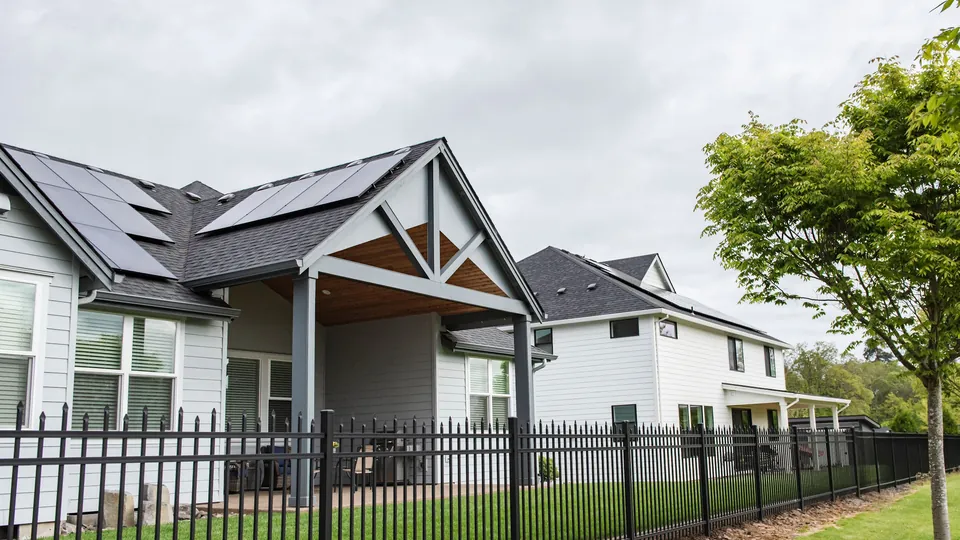
Solar permitting: key highlights
You typically need both a structural building permit and an electrical permit for solar.
- It's Not Just One Permit: You typically need both a Structural Building Permit (for the roof) and an Electrical Permit (for the wiring).
- Jurisdiction Matters: "Portland" is a broad term. Rules differ depending on whether you are in the City of Portland, Oregon City, Lake Oswego, or unincorporated Clackamas County.
- The Utility Handshake: Getting the permit is only half the battle; we also have to file an Interconnection Agreement with PGE for Net Metering.
- HOA Rights: Good news - Oregon law protects your right to generate energy. HOAs cannot unreasonably ban solar panels.
- We Do The Paperwork: The good part? Energy Solutions manages this entire process for you. You don't need to stand in line at the permit office.
Step 1: The Jurisdiction Hunt
Step 1 is the jurisdiction hunt: we find out which permitting office covers your property.
The first thing we determine is: Which office has authority over your roof?
If your mailing address says "Portland," you might actually be in unincorporated Multnomah County. If you live in Clackamas County, you might be under the jurisdiction of Oregon City, Happy Valley, or the county itself.
Each jurisdiction has different snow load requirements, wind ratings, and setback rules.
- City of Portland (BDS): Has a streamlined "Solar Prescriptive Path" for simple roofs, but strict rules for historic districts.
- Clackamas County: Often requires detailed structural engineering for older homes to prove they can hold the weight.
Step 2: Engineering & Design
Step 2 is engineering and design, where we prove the system works before we apply.
Before we apply, we have to prove it works. We prepare a "line diagram" and a structural analysis.
We calculate:
- Dead Load: The weight of the panels themselves.
- Live Load: The weight of a worker standing on them.
- Environmental Load: The weight of a potential February ice storm or a wind gust coming down the Columbia Gorge.
Step 3: Submission & Review
We submit the packet to the building department.
- The Wait Time: In a perfect world, this goes quickly. In reality, during the summer rush, some building departments take much longer to review plans.
- The Corrections: Sometimes, a plan reviewer asks for a change. "Add a sticker here" or "Clarify the rafter spacing there." We handle these revisions for you.
Step 4: The Utility Interconnection (PGE)
While the city looks at the structure, we also have to talk to PGE (Portland General Electric) about the electricity.
We file a Net Metering Application. This tells PGE that you are about to become a power plant. They check to make sure the transformer on your street can handle the extra energy you'll be sending back. It is rare, but sometimes they require upgrades to their equipment before we can connect.
Step 5: Installation & Inspection
Once we have the "Green Light" (the physical permit card), we install your system. But we aren't done yet.
We have to schedule two main inspections:
- The Structural Inspection: The city inspector checks the racking to ensure lag bolts are hitting the rafters and the roof is watertight.
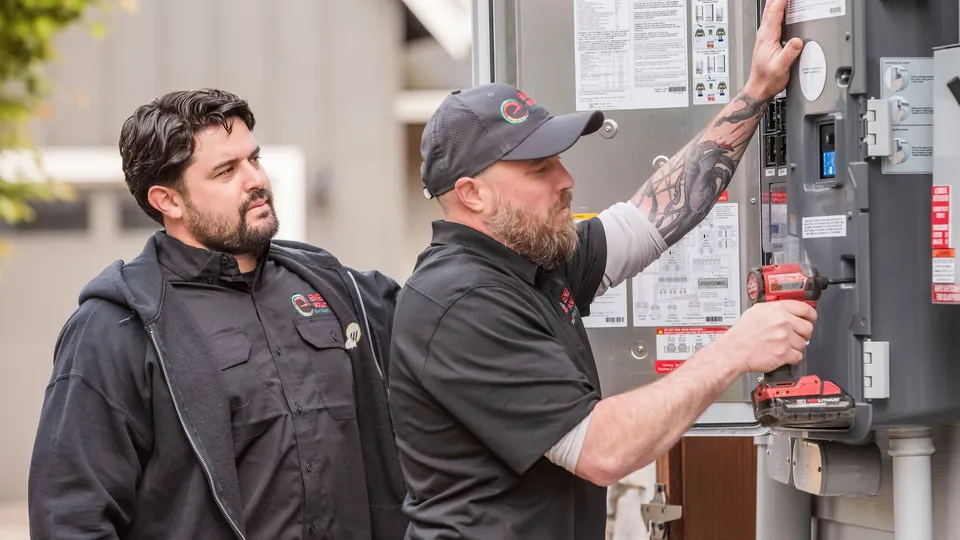
- The Electrical Inspection: They check the grounding, the wire sizing, and the safety labels.
Step 6: Permission to Operate (PTO)
Step 6 is Permission to Operate (PTO), the utility's approval to turn your system on.
This is the final hurdle. Once the city signs off, we send that proof to PGE.
PGE then installs a Bi-Directional Meter (one that can spin backward) and issues a letter called "Permission to Operate."
Only then can you flip the switch. Turning the system on before PTO can result in fines or billing errors, so we always advise patience for this final step.
The Bottom Line
The bottom line: solar permitting is a lot of paperwork, and we handle it for you.
If this sounds like a lot of paperwork, it is. But the good news? You don't have to do any of it.
At Energy Solutions, our team knows these codes well. We know what the City of Portland or Clackamas County wants to see.
Your job is to dream about your savings. Our job is to handle the red tape.
Ready to start the process? Get My Free Quote or call our local team at (971) 526-5545.
Solar permitting FAQs
Solar permitting involves your city or county, your utility, and an inspection.
Can my HOA stop me from getting a permit?
Generally, no. In Oregon, state law limits how far an HOA can restrict solar panels, and it protects a homeowner's right to generate their own energy. Check your HOA's rules and ask us if you are unsure. An HOA can impose "reasonable" aesthetic rules (like asking for black-frame panels), but they cannot prevent you from installing a system or require you to put it in a shady spot that ruins performance.
How much do permits cost?
Permit fees vary by city and system size. We handle the permit process and walk you through any fees in your written quote.
Do I need to be home for the inspections?
Usually, yes. The inspector often needs access to the main electrical panel (which is often in the garage) and the attic. We will coordinate with you to find a time window that works for you.