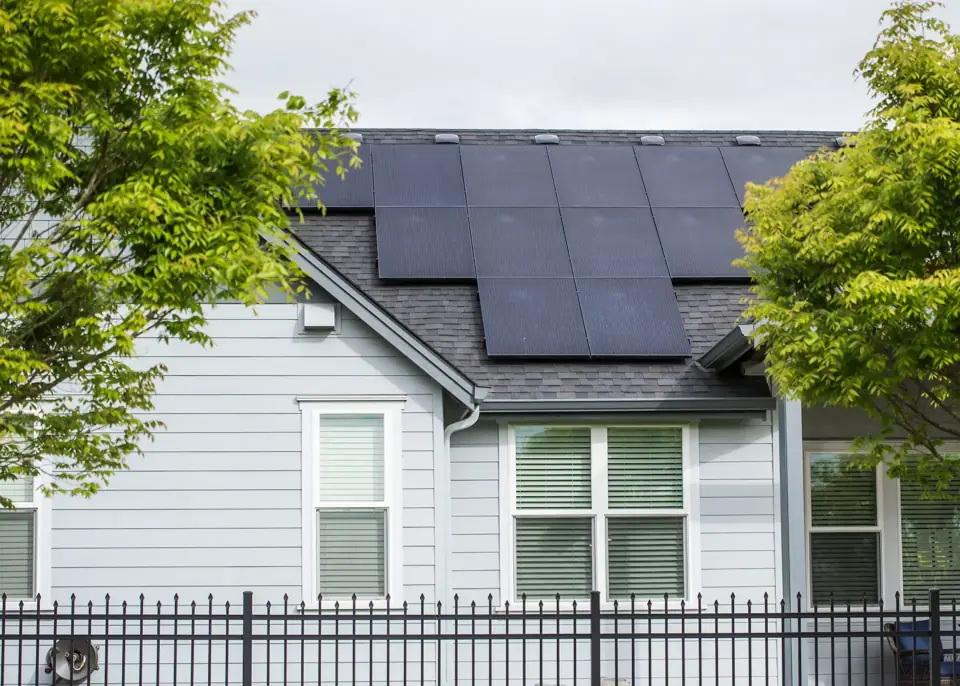
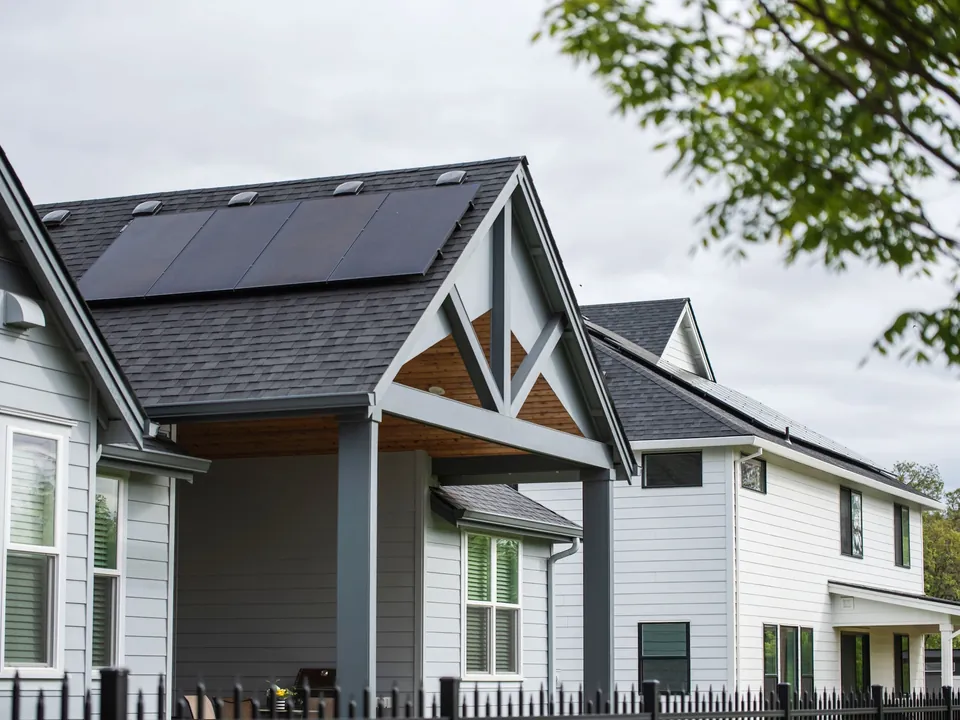
Solar for Happy Valley homes
Residential solar lets Happy Valley homeowners generate their own renewable power. From spacious suburban homes to compact apartment complexes, more and more homeowners and building owners are making the switch. In this complete Happy Valley solar installer guide, you'll find out why your home should explore this option too.
How Do Solar Panels Work?
Solar panels use sunlight to create DC power, which your inverter converts into electricity your Happy Valley home can use.
- Capturing Sunlight: Solar panels are designed to capture sunlight, which consists of tiny energy particles known as photons.
- Energy Creation: Panels are made of materials like silicon that have a built-in electric field.
- Electron Movement: The energy from photons dislodges electrons (tiny particles inside atoms) from their usual positions.
- Electricity Generation: The movement of electrons generates a flow of electricity, known as direct current (DC).
- Current Conversion: To make the DC electricity suitable for home use, an inverter converts it to alternating current (AC).
- Excess Energy Use or Storage: If your solar panels generate more electricity than you need, the extra can be stored in solar batteries for later use or fed back into the electric grid. Depending on your utility company, you might receive credits for this!
In essence, solar panels harness sunlight, a resource that is plentiful in Happy Valley in summer, converting it into electricity in an eco-friendly, renewable manner.
Why Go Solar in Happy Valley?
Happy Valley gets long, sunny summers, and the rainy season helps clean your panels. Oregon also offers solar incentives and rebates, which can make solar a smart choice in Happy Valley. This decision means:
- Capitalizing on state incentives and policies
- Harnessing summer sunshine for power
- Contributing to a sustainable future
- Lowering your electricity bills
- Boosting the value of your property
Financial Advantages of Residential Solar
Residential solar panels in Happy Valley can significantly reduce energy costs and stabilize your expenditure. Solar power is not just a renewable energy source; it can be a sound long-term investment with benefits like:
- Reduction in utility bills
- Stabilization of energy costs
- Increased property value
- Payback time that depends on your usage, rates, and system
Environmental Advantages of Solar Power
Switching to residential solar panels decreases your carbon footprint, contributing to a more sustainable future. Solar energy does not emit harmful greenhouse gases and helps fight climate change. Key environmental benefits include:
- Reduction in carbon emissions
- Protection of water resources
- Decreased dependence on fossil fuels
- Promotion of a healthier environment
The Installation Process
Solar in Happy Valley follows four steps: assessment, design, permits, and installation.
- Property Assessment: Experts evaluate the property's suitability for solar panels, considering factors like structure, sun exposure, and energy usage.
- System Design: A custom solar panel system is designed for efficiency and aesthetics.
- Permit Securing: The necessary permits, including building and electrical permits, are obtained to simplify local regulations.
- Installation: Technicians install the panels and conduct comprehensive system tests.
Throughout this process, homeowners can expect continuous support and communication from us, ensuring a seamless transition to solar energy.
Solar System Types for Happy Valley Homes
We can tailor the system to various residential properties, from single-family homes to multi-story buildings. Types of installations include ground mount, rooftop, and solar carports.
Ground Mount Installations
Ground mount installations offer flexible positioning for solar panels, optimizing energy production. They suit properties with plenty of unused land, with key advantages like:
- Optimal positioning for maximum sun exposure
- Scalability to meet high energy demands
- Ease of access for maintenance
Solar Carports
Solar carports provide dual functionality: energy production and vehicle shading. They optimize outdoor parking spaces, with benefits like:
- Dual functionality: energy generation and vehicle shading
- Space-efficient, utilizing existing parking spaces
- Visible commitment to renewable energy
Rooftop Solar Installations
Rooftop installations are favored by homeowners in urban settings or with limited ground space. These systems utilize unused rooftop space to generate power, with advantages such as:
- Efficient use of space, not requiring additional land
- Potential to meet all or most of the home's energy needs
- Reduced energy loss and costs due to closer proximity to the point of use
Happy Valley Solar Incentives
Happy Valley homeowners can check Oregon solar incentives that may lower the cost of going solar.
Request a free consultation for your home to learn more.
Key Oregon solar incentives
- Federal residential solar credit: The federal homeowner credit ended Dec 31, 2025. Business credits may still apply - ask us.
- Oregon Solar + Storage Rebate Program: This state program has offered rebates for solar and for solar plus battery backup. Amounts and eligibility change often - we check the current numbers for your home.
- Solar Within Reach Program: A cash incentive program for qualifying low-income households served by Portland General Electric and Pacific Power. Amounts and eligibility change often - we check the current numbers for your home.
- Renewable Energy Systems Exemption: An Oregon property tax exemption that keeps the added home value from a solar system from raising your property taxes. Details change often - we check the current terms for your home.
- Net Metering: Utility net metering programs let you get credit for excess solar electricity sent back to the grid. This credit offsets the electricity you use at other times, helping reduce your utility bills.
These incentives are subject to change. Remember to check with a tax professional or financial advisor for the most accurate and current information about your specific circumstances.
Update, Oct 2026: the federal residential solar credit (25D) ended Dec 31, 2025. Business credits may still apply - ask us.
Net Metering: How Does It Work?
Net metering in Oregon is a billing system that allows homeowners and businesses with solar power systems to receive credit for excess electricity they generate and return to the electrical grid. Here's how it works:
- Production of Solar Energy: Your solar panels generate electricity from sunlight to power your home or business.
- Excess Energy Generation: If your solar system produces more electricity than you use, the surplus energy is fed back into the grid.
- Electricity Metering: Your electricity meter keeps track of this 'give and take' of power. If you supply excess power to the grid, your meter effectively runs backward.
- Billing and Credits: At the end of the billing period, you're charged only for the 'net' energy use, calculated by subtracting the energy you've supplied to the grid from the energy you've used. If you've generated more than you've used, you'll receive a credit from your utility company.
Net metering is a cost-effective way for solar power system owners to maximize their investment, offsetting the cost of power drawn from the utility when the system isn't producing enough electricity.
Is Solar Worth It in Happy Valley, Oregon?
Investing in solar energy in Happy Valley can be a smart decision. The city's climate, combined with Oregon's renewable energy policies, makes it a good location for solar installations. Despite its reputation for rain, Happy Valley receives enough sunlight, especially in summer, for effective solar power generation.
Oregon programs, such as net metering and state incentives, can help with the cost of solar. Amounts and eligibility change often, and how quickly it pays off depends on your usage, your utility rates, and your system - we walk you through the numbers for your home.
Solar panels can also add to property value and contribute to a sustainable future by reducing dependence on fossil fuels. So, solar can make sense economically and environmentally.
In summary, climate suitability, state incentives, and long-term financial and environmental benefits make solar worth a close look for Happy Valley homeowners.
Find Out If Solar Is Right for Me
Find out if solar is right for your home by starting with a free consultation.
If you're interested in learning more about solar power for your Happy Valley home, contact us today at (971) 526-5545 for a free solar estimate. Our team will assess your property and walk you through system options, incentives, and more. As a licensed Oregon electrical contractor (CCB 202002), in business since 2013, we make it easy to go solar. Reach out and take the first step toward energy independence.