Solar Panel Installations in Clackamas County
Solar panels turn sunlight into power for Clackamas County homes.
Solar power in areas such as Lake Oswego, Clackamas, Oregon City, and Happy Valley involves setting up photovoltaic panels on rooftops or ground spaces to produce electricity from sunlight.
This guide offers a thorough exploration of residential solar power. It covers the operational principles of solar technology, examines the potential impact of Pacific Northwest weather conditions, and outlines the practicality and benefits of installing solar panels in Clackamas County.
How Do Solar Panels Work?
Sunlight striking the silicon cells in a panel produces electricity, and an inverter makes it usable for your home.
Solar panels are made of solar cells, which contain a photovoltaic material, usually silicon, that absorbs photons from sunlight. The photons knock electrons loose from their atoms, allowing the electrons to flow freely and generate a current.
The solar cells are wired together in a panel to produce direct current (DC) electricity. This DC current passes through an inverter, which converts it into alternating current (AC) electricity that can be used to power homes and appliances.
The basic steps in how solar panels generate electricity are:
- Photons from sunlight hit the solar panel and are absorbed by the solar cells.
- These photons contain energy that knocks electrons loose in the solar cell material, allowing them to flow freely.
- The free-flowing electrons generate DC current.
- An inverter changes the DC current to AC.
- The electricity is then ready for use in the home or to be fed back into the utility grid.
So in short, solar panels produce clean renewable electricity by converting sunlight into an electric current using special materials like silicon. This conversion happens through the photovoltaic effect at the atomic level inside the solar cells. Solar panels require no fuel other than sunlight to generate emissions-free power.
What About the Weather?
Clackamas County's weather does not stop solar from working.
Contrary to its reputation for rain, Clackamas County enjoys lengthy daylight hours in summer, which helps solar production. Solar panels are designed to capture scattered light, effectively converting it to usable electricity even on overcast days. Any excess power you produce can earn credits from your utility for use during cloudier months.
Why Go Solar in Clackamas County?
Clackamas County's climate supports solar, with rain that doubles as panel cleaning.
Oregon also offers solar incentives and rebates.
Choosing solar in Clackamas County means:
- Making the most of state incentives and policies
- Using sunshine for power
- Contributing to a sustainable future
- Saving money by reducing your electricity bills
- Increasing the value of the property
Financial Benefits of Residential Solar
Residential solar panels in Clackamas County provide many benefits compared to the traditional way of powering your home using just grid energy. Here are some you may see after installing solar panels on your home:
- Reduction in utility bills: By generating your own electricity from the sun's rays, you'll rely far less on the grid and can lower your utility bills. How much you save depends on your energy usage, your rates, and your system.
- Stabilization of energy costs: Utility rates often rise year after year, but with solar power, you can make your energy costs more predictable. This helps protect you from rising electricity prices.
- Increased property value: Homes with solar panels can sell for more than similar non-solar homes, and appraisers may also factor in expected energy bill savings. How much value it adds depends on the system and your local market.
- Long-term value: Between utility savings, incentives, and increased home value, a solar system can pay off over time. How quickly depends on your usage, your rates, and your system, and the panels keep generating electricity for many years.
In short, going solar in Clackamas County is a long-term investment that can lower your utility bills and help protect you from rising energy costs.
Environmental Benefits of Solar Power
Residential solar is a direct way to shrink your carbon footprint.
Solar energy doesn't emit harmful greenhouse gases and aids in battling climate change. Crucial environmental benefits include:
- Reduction in carbon emissions: By utilizing solar power instead of fossil fuel-generated electricity from the grid, homeowners can significantly cut carbon emissions associated with their energy use. This directly decreases their carbon footprint. Solar panels produce no direct emissions while operating.
- Conservation of water resources: Fossil fuel energy production consumes vast amounts of water. Solar power cuts this demand, conserving freshwater resources. This is especially important in arid regions facing water scarcity.
- Decrease in dependence on fossil fuels: Widespread adoption of solar energy reduces reliance on polluting energy sources like coal and natural gas. This facilitates a cleaner energy mix for the future.
- Promotion of a healthier environment: By curbing air pollution and emissions, solar power contributes to better air quality and environmental health. This benefits public health as well.
The Installation Process
Clackamas County solar installs follow five steps: assessment, design, permits, installation, and testing.
Property Assessment
Experts evaluate the property's suitability for solar panels, considering factors like structure, sun exposure, and energy usage patterns. This allows them to determine the ideal system design and placement.
System Design
A tailor-made solar panel system is designed specifically for the property to maximize efficiency and aesthetics. The experts take into account the roof layout, ideal tilt angles, solar access, and expected energy needs.
Securing Permits
The necessary permits, including building and electrical permits, are obtained on the homeowner's behalf. This simplifies the complex process of navigating local regulations and codes.
Installation
Once the permits are secured, our experienced Clackamas County solar installers will install the solar panels and other system components. This is when the property begins its transition to solar power.
Testing
Thorough testing and commissioning ensure the system functions as intended before completion. The technicians verify correct wiring, performance, safety, and integration with the home's electrical panel (see electrical panel upgrade for more info).
Throughout this streamlined process, the homeowner can expect clear communication and steady support, making the switch to solar energy simple and straightforward.
Types of Residential Solar Installations
A Clackamas County solar installation can be rooftop, ground-mounted, or a solar carport, depending on your site.
The main types of solar installations are:
Rooftop Solar
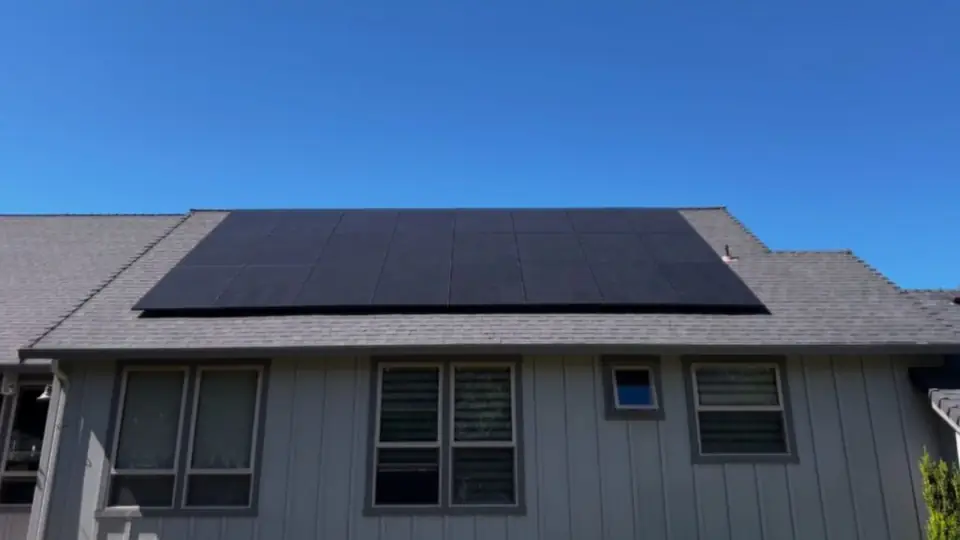
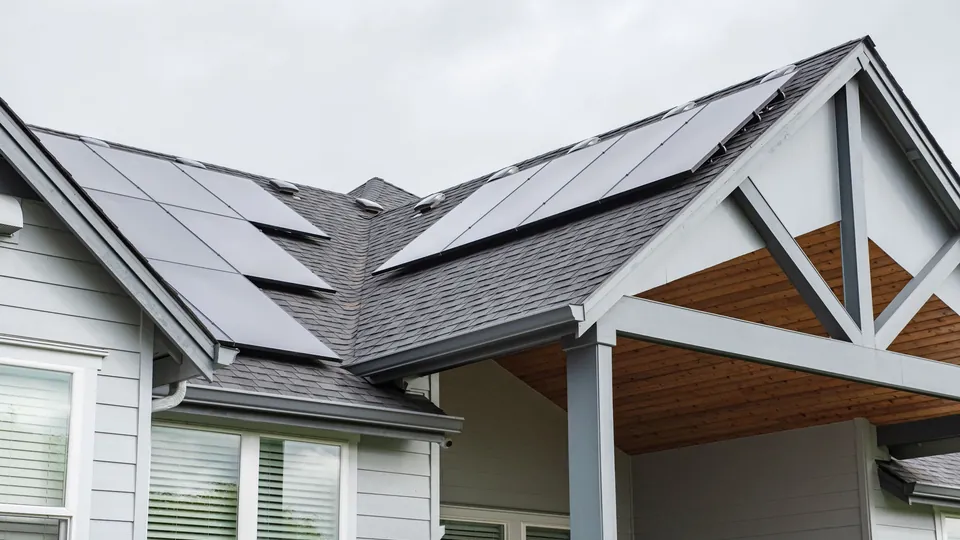
Rooftop solar panels are installed directly on the roof of a home or building. This is a popular option for many homeowners as it utilizes unused roof space to generate electricity.
- Make efficient use of space, not requiring additional land
- Can meet much or all of the home's electricity needs
- Close proximity to the point of use reduces energy loss
Ground-Mount Solar
Ground-mount solar arrays are installed on the ground, often in backyards or open spaces on a property.
- Allows flexible positioning for maximum sun exposure
- Easily scalable to increase system size
- Provides easy access to the panels for maintenance
Solar Carports
Solar carports are elevated solar panel structures built above parking spaces or driveways.
- Dual function for power and vehicle shading
- Utilize existing outdoor parking areas
- Visibly demonstrate renewable energy commitment
The right solar installation type depends on factors like available space, energy needs, aesthetic preferences, and local zoning laws. A Clackamas County solar installer can recommend the right option for your home.
Clackamas County Solar Incentives
Clackamas County homeowners looking to go solar can take advantage of several solar incentives to reduce the cost of installation. Here are some of the main solar incentives available in Clackamas County. To view a complete list, please visit our in-depth solar incentive page.
Key Oregon solar incentives
- Federal Solar Investment Tax Credit: The federal residential credit has ended (Dec 31, 2025). Business credits may still apply - ask us.
- Oregon Solar + Storage Rebate Program: This state rebate program covers new solar electric systems, and homeowners who also add solar plus battery backup may qualify for more. Amounts and eligibility change often - we check the current numbers for your home.
- Solar Within Reach Program: This cash incentive program is for qualifying low-income Portland General Electric and Pacific Power customers. Amounts and eligibility change often - we check the current numbers for your home.
- Renewable Energy Systems Exemption: This Oregon property tax exemption allows homeowners to avoid higher property taxes from increasing home values after installing a solar energy system. Details and eligibility change, so we check the current rules for your home.
- Net Metering: Utility net metering programs let you get credit for excess solar electricity sent back to the grid. This credit offsets the electricity you use at other times, helping reduce your utility bills.
These incentives are subject to change.
Update, Oct 2026: the federal residential solar credit (25D) ended Dec 31, 2025. Business credits may still apply - ask us.
Net Metering: How Does It Work?
Net metering lets Clackamas County solar owners earn bill credits for the extra power they send to the grid.
Here's a quick rundown of how those credits work:
- Your solar panels may produce more electricity than you use during sunny daylight hours. This excess energy gets fed into the local utility grid.
- The utility company installs a special net meter at your home. This meter can spin backward when your solar panels generate extra electricity, unlike a standard meter which only goes forward.
- At night or during cloudy weather, when your solar system produces less power, you pull electricity back from the grid.
- At the end of each billing cycle, your utility company calculates the net difference between what you took from the grid versus what you supplied back.
- If you gave more power than you used, your net meter reading will be negative or in "credit" - and unused credits roll over on your electricity bill.
- Depending on your state's net metering policies, your utility company may also pay you for excess credit at the end of the year.
This means that for many solar homeowners, their annual electricity costs can drop by harnessing the sun's energy. So in short, net metering provides a direct financial incentive for going solar by giving you credit for the extra clean power you produce. Those credits can offset your electricity purchases from the grid when needed.
Clackamas County Solar FAQs
Solar installation costs in Clackamas County depend on your roof, usage, system size, and equipment, and we quote a real number for free.
What does solar installation in Clackamas County cost?
Cost depends on your roof, usage, system size, and equipment. We give you a real number in a free quote.
How much can I save on my energy bills with solar panels?
With solar panels, Clackamas County homeowners can reduce their electricity bills. The exact savings depend on system size, electricity usage, and local utility rates.
How long do solar panels last?
With proper maintenance, solar panels can stay productive for many years. Manufacturers offer warranties on solar panels, and terms vary by product.
Can solar panels work on cloudy days?
Yes, solar panels can still generate electricity even on cloudy days, though at reduced efficiency compared to clear days.
What are the steps to install solar panels?
The main steps are property assessment, system design, permit approval, installation, testing, and interconnection to the utility grid.
Are there rebates or incentives available for solar in Clackamas County?
State rebates, net metering, and Energy Trust programs may apply. The federal homeowner credit ended Dec 31, 2025, and business credits may still apply.
Is Solar Worth It in Clackamas County?
In Clackamas County, solar energy can be a worthwhile decision. The region's climate, with long summer daylight hours, supports solar panel installations.
Not only do solar systems reduce reliance on traditional energy sources and lower electricity bills, but they can also add to property value. With local rebates and net metering policies, homeowners and businesses can lower their energy costs. Business credits may still apply - ask us.
Additionally, the environmental benefits of reducing carbon emissions and conserving water resources align with a growing commitment to sustainability. In summary, the combination of favorable climate, financial incentives, and environmental impact makes solar worth a look in Clackamas County.
Free Quotes from Your Clackamas County Solar Company
Ask Energy Solutions for a free solar consultation to see what solar can do for your Clackamas County home.
Talk to our solar experts. We offer free solar consultations to assess your property and provide a tailored proposal based on your specific home.
As a licensed Oregon electrical contractor (CCB 202002), in business since 2013, our team simplifies the process of going solar for Clackamas County homeowners. We handle everything from system design to permits and installation.
To get started, call us at (971) 526-5545 or fill out our online request form and we'll be in touch.
During the Consultation
- Evaluate the viability of solar for your particular home
- Calculate potential cost savings based on your energy usage
- Explain the state, utility, and local incentives you may qualify for
- Design a custom solar system to maximize sunlight exposure and meet your energy needs
- Talk through financing options (terms vary by lender)
- Guide you through the installation process from start to finish
Take control of your energy costs and help the environment by putting Clackamas County's sunshine to work. Reach out today to discuss how solar can benefit your household!